Table of Contents
ToggleWhy You Should Check Your Email and Spam Folder Every Day After Submitting Your Canada PR Application
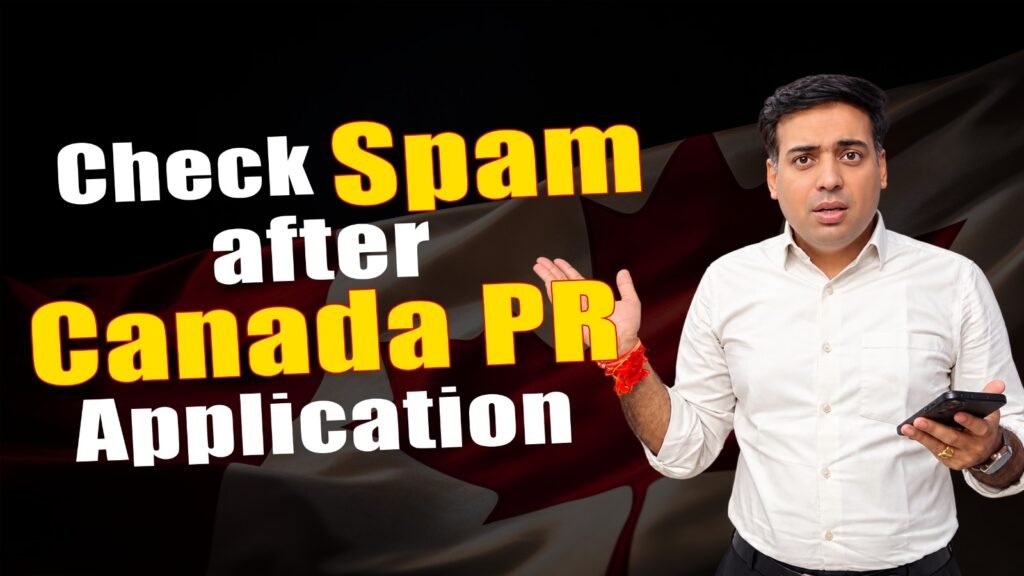
After submitting your Canada PR application, you should check your email inbox and spam folder every single day. An email from IRCC can land in your spam folder, and if you do not check it, it can create problems for your application. Two incidents demonstrate how missing an email can cause an applicant to lose an opportunity or miss an important deadline.
1. The First Incident: A PR Application Refused Due to a Medical Examination
In the first incident, a client’s Canada PR application was refused because the visa officer stated that a completed upfront medical report had not been provided with the application. The medical examination had been completed on February 19, 2022, and the application was submitted around June or July 2026.
The application included the medical examination and a letter of explanation with screenshots and links referring to the relevant policy. The policy discussed allowed the use of a medical examination completed within the previous five years. Despite submitting the medical report and the explanation, the application was refused on September 8, 2026.
The refusal was shocking because the medical examination had been provided and was considered valid under the policy being relied upon. Similar incidents had been reported by other applicants, and medical examinations had already started being completed again for clients. This same issue then occurred with one of the clients.
2. How Missing the Refusal Email Caused the Applicant to Lose an Opportunity
The applicant did not check the email for many days because the refusal email had landed in the spam folder. When the GCKey account was opened, the refusal dated September 8, 2026, was discovered more than 40 to 45 days later.
During that period, there had been an Express Entry draw with a CRS cut-off of 519 and another with a cut-off of 518. The applicant’s CRS score had been 519, so a new profile and expression of interest could have been created, and the applicant could have submitted the application again.
However, the applicant had lost five points because of age, and the current CRS score was 514. The work permit was also due to expire the following month, and preparations had been underway to apply for a bridging open work permit.
If the refusal email had been noticed on September 8, the reconsideration request could have been submitted much earlier. Instead, the refusal was discovered after more than 40 days. The opportunity to act earlier had been lost because the applicant had not checked the email and GCKey account.
3. Why You Must Check Your Inbox and Spam Folder
You should check your regular inbox and spam folder every day to make sure that there is no new email from IRCC. Even if you receive many emails, you should check for important communications.
The first applicant’s refusal email was in the spam folder, and it was not noticed for more than 40 days. In the second incident, the applicant received only four to five hours to respond to an additional document request.
You should check your email at least once a day and check the spam folder as well. If an email arrives, you should be able to respond immediately. Each day is important because you may not have much time to act.
4. The Second Incident: An Additional Document Request With a Same-Day Deadline
In the second incident, IRCC sent an additional document request (ADR) on September 29, 2026. The email arrived at approximately 1:00 p.m., and the visa officer asked for the information to be submitted on the same day.
There were three items to be submitted. For two items, the applicant received 10 days. For the remaining document, the applicant received only four to five hours because the deadline was the same day.
It is not known whether the short deadline was a mistake or whether the visa officer wanted the information urgently. The email arrived at approximately 1:00 p.m., and the day ended in Canada at around 6:00 p.m.
The applicant checked the email after finishing work, by which time the deadline had passed. The requested information was submitted after the deadline, along with an explanation to the visa officer that the email had not been checked on the day it arrived.
In this case, the email was discovered on the same day, although the deadline had already passed. The situation could still be explained. However, the incident demonstrates why you should check your email every day.
5. Why Missing Deadlines Can Affect Your Options
When a visa officer asks for additional documents on the same day, you may have only a few hours to respond. If you do not check the email in time, you may miss the deadline.
Similarly, if an application is refused and you discover the refusal after several days or weeks, the time available to take further action may have passed. In the first incident, more than 40 to 45 days had passed before the refusal was discovered. The possibility of creating another Express Entry profile and submitting an expression of interest during the relevant draws had been lost.
The discussion also refers to judicial review, explaining that if 15 days have passed, that opportunity may no longer be available in the situation described. Therefore, you should check your email and GCKey account regularly so that you know what is happening with your application.
6. Another Incident: A PGWP Applicant Whose ADR Was Not Checked for Eight Days
Another case involved an applicant named Ajit. In his case, the consultant did not check the additional document request for eight days. The applicant received a refusal for the PGWP application after the ADR deadline had passed.
During those eight days, the applicant kept asking the consultant whether there was any update. However, the consultant did not check the email or GCKey account. The deadline passed, and the refusal came the following day.
The applicant had received two refusals: one for an application submitted independently and another for an application submitted through a consultant. The consultant had made a mistake by not paying $150, and the situation became more complicated. After the refusal, the applicant was out of status, and the PGWP options and the possibility of submitting a judicial review were no longer available in the circumstances described.
This incident demonstrates that a delay in checking an email or GCKey account can create serious problems for an application.
7. Keep Control of Your Application and GCKey Account
You should have control of your application and take responsibility for monitoring it. You can ask for your GCKey account to be used when creating your expression of interest and should be able to check what is happening with your application.
A consultant may have many applications to manage. There may also be holidays, medical leave, staff shortages or other circumstances in which emails and GCKey accounts are not checked every day. Problems have occurred in such situations, even if they were not deliberate.
You have access to your own email and GCKey account, so you should check them regularly. If you receive an update, share it with your consultant as soon as possible.
Having control of your application also means accepting responsibility for checking your email, spam folder and GCKey account. You should maintain access and make sure that you do not miss an important communication from IRCC.
8. The Medical Examination Recommendation Discussed in the First Incident
Following the refusal, the recommendation discussed was to complete a new medical examination before submitting an application rather than relying on the five-year policy. The suggested approach was to ensure that the medical examination was not more than 12 months old.
This recommendation was discussed for PR applications, study permit extensions and PGWP applications where the applicant did not want a condition preventing them from working in healthcare or education.
The first application had included a medical examination completed on February 19, 2022, along with a letter of explanation and screenshots referring to the relevant policy. The medical was considered valid under the five-year public policy, but the application was still refused.
The reason for refusal stated that a completed upfront medical report had not been provided with the application. Following this experience, the recommendation was to complete a new medical examination before submitting the application and not to attach the previous medical in the circumstances described.
9. Take Responsibility for Checking Your Email and GCKey
You should not leave your email unchecked for a long time after submitting your application. Check your regular inbox, spam folder and GCKey account every day.
The incidents discussed involved a PR application refusal discovered more than 40 days later, an ADR with a same-day deadline and a PGWP application where the consultant did not check an ADR for eight days.
You should have access to your application and take responsibility for monitoring it. If you receive an update from IRCC, share it with your consultant as soon as you receive it.
The recommendation is to maintain control of your application rather than giving up access to it. You can have the support of a consultant while also checking your own email and GCKey account.
10. Final Message
After submitting your Canada PR application, check your email and spam folder every day. Check your GCKey account as well, and do not wait for a consultant to inform you about every update.
If IRCC sends an email, you should check it promptly because you may receive a refusal or an additional document request with a short deadline. Missing an email can mean losing an opportunity to submit another expression of interest or respond to a request within the required time.
Take control of your application and take responsibility for checking your email and GCKey account. If you receive an update, share it with your consultant as soon as possible.
If you want to know about recent Express Entry updates where you may get 70 to 100 additional points, the related video discusses the major changes that have happened in Express Entry and how they may provide a pathway to PR. It is a one-hour deep analysis.