Table of Contents
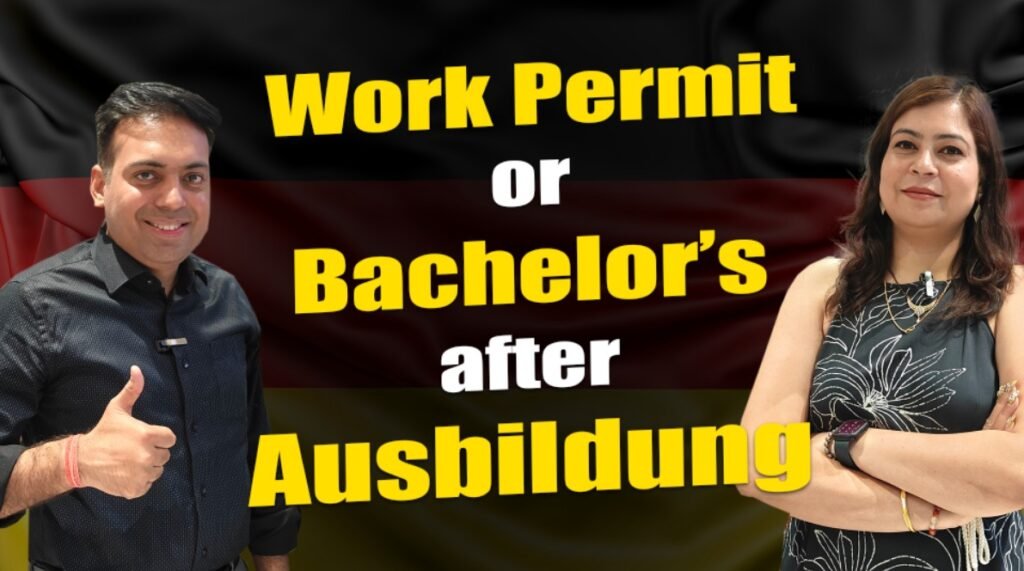
ToggleGermany Ausbildung Study After PGWP: PR First or Bachelor’s Degree? Complete Guide for Indian Students
Many students planning to move to Germany through the Ausbildung pathway have one common question:
- Will I get a Post-Study Work Permit (PGWP) after Ausbildung?
- Should I convert my Ausbildung visa into a study visa for a Bachelor’s degree?
- What is the best pathway toward PR in Germany?
These are extremely important questions because most international students are not only looking for education abroad — they are looking for long-term settlement, career growth, and permanent residency opportunities.
At Globexa Immigration, many students ask whether they should continue studying after Ausbildung or directly move toward a work permit and PR pathway. In this blog, we will explain everything in detail.
1. What is Ausbildung in Germany?
Germany offers a very popular vocational training program called Ausbildung. Under this system, students receive practical training with employers while also studying theoretical subjects.
Students usually:
- Work with an employer
- Receive monthly stipend/salary
- Gain practical industry experience
- Learn the German language
- Build long-term employer relationships
Popular Ausbildung fields include:
- Hospitality
- Nursing
- Healthcare
- Logistics
- IT
- Mechanical fields
- Technical trades
This pathway is becoming highly popular among Indian students because it offers:
- Affordable education
- Paid training
- Strong job opportunities
- Direct PR potential
2. Will Students Get PGWP After Ausbildung in Germany?
Yes. Students completing Ausbildung in Germany can receive an 18-month post-study work permit.
This is one of the biggest advantages of the Ausbildung pathway.
After completing Ausbildung:
- Students become eligible for an 18-month job seeker/work permit
- They can work full-time
- They can search for skilled jobs
- They can transition toward long-term work permits and PR
The 18-month period acts similarly to an open work permit where students can:
- Continue with the same employer
- Switch employers
- Build skilled work experience
- Strengthen their PR profile
This is why Ausbildung is considered one of the strongest practical immigration pathways in Germany.
3. Can Students Convert Ausbildung Visa into a Study Visa?
Yes, students can convert their Ausbildung visa into a study visa for a Bachelor’s degree or higher studies.
This can happen:
- During Ausbildung
- After completing Ausbildung
However, this does not always mean it is the best option.
Many students think:
“After Ausbildung, I should immediately start a Bachelor’s degree.”
But practically speaking, that may not be the smartest immigration strategy.
4. Why PR Should Be the Main Goal
The reality is simple:
Most students do not move abroad only for studies. The bigger goal is:
- Career stability
- Financial growth
- Long-term settlement
- Permanent Residency (PR)
Without PR, students often face:
- Visa uncertainty
- Expensive tuition again
- Work permit renewals
- Country switching
- Financial pressure
That is why PR should be the primary target.
At Globexa Immigration, we strongly recommend students focus first on:
- PGWP
- Skilled Work Permit
- PR pathway
- Further studies later
5. Why Taking PGWP First is the Better Option
After Ausbildung, students already have:
- 3 years of industry experience
- Employer connections
- German work culture exposure
- German language skills
- Professional training
- Practical experience
Most students also reach:
- B2 German level
- Sometimes even C1 German proficiency
This makes them highly valuable in the German job market.
So instead of restarting another long study program immediately, it is usually smarter to:
- Take the 18-month PGWP
- Continue with the employer
- Apply for a Skilled Work Permit
- Build experience
- Apply for PR as early as possible
6. Germany PR Becomes Easier with Language Skills
One major advantage in Europe is language proficiency.
In Germany, students who speak German fluently have significantly stronger PR pathways.
If students:
- Complete Ausbildung
- Work with an employer
- Speak German at B2 or C1 level
- Gain skilled experience
Then their PR process becomes much smoother.
Language is one of the strongest factors in European immigration success.
7. Why Employer Relationship Matters
Students completing Ausbildung usually spend years working with the same employer.
This creates:
- Trust
- Professional reputation
- Long-term employment opportunities
When students already have:
- 3 years with an employer
- German experience
- German language proficiency
Employers are often willing to support:
- Skilled Work Permit applications
- Long-term contracts
- PR pathways
This becomes a major advantage compared to students who restart studies and lose that employer connection.
8. Why Immediate Bachelor’s Degree May Not Be Ideal
Many students think:
“I should immediately continue studies after Ausbildung.”
But this can delay PR significantly.
If students:
- Start another 3-year Bachelor’s degree
- Delay skilled work experience
- Lose employer support
- Delay PR application
Then immigration rules may also change during that period.
And immigration rules globally are becoming stricter every year.
Whether it is:
- Canada
- United Kingdom
- Australia
- New Zealand
- Ireland
- United States
- Germany
- Finland
PR rules become more competitive over time.
That is why early PR planning is extremely important.
9. Best Germany Ausbildung PR Pathway
Here is the ideal pathway most students should follow:
Step 1: Complete Ausbildung
- Gain training
- Learn German
- Build employer relationship
Step 2: Apply for 18-Month PGWP
- Search for skilled employment
- Continue with employer
Step 3: Convert to Skilled Work Permit
- Secure long-term skilled employment
- Gain professional experience
Step 4: Apply for PR
- Build stable future in Germany
- Secure long-term settlement
Step 5: Continue Higher Education Later
After PR, students can:
- Do Bachelor’s
- Do Master’s
- Do PhD
- Study part-time
- Study with lower costs
Many public universities may become far more affordable after PR.
10. What If Things Don’t Work During PGWP?
Some students worry:
“What if I cannot build my profile during PGWP?”
In reality, students completing Ausbildung already have:
- Experience
- Employer network
- Language skills
- Industry training
That is why most students successfully transition toward skilled work permits.
In practical cases, students who:
- Complete Ausbildung seriously
- Learn German properly
- Maintain employer relationships
usually build strong PR pathways.
11. Germany Ausbildung vs Direct Bachelor’s Degree
| Ausbildung Pathway | Direct Bachelor’s |
|---|---|
| Paid training | Higher tuition/living costs |
| Industry experience | Mostly academic exposure |
| Employer relationship | Limited employer connection |
| Faster PR potential | Longer PR timeline |
| Work permit transition easier | More competition later |
This is why Ausbildung is becoming a highly practical option for students focused on long-term settlement.
Final Thoughts
If your goal is long-term settlement in Germany, then the smartest strategy is usually:
- Complete Ausbildung
- Take PGWP
- Move toward Skilled Work Permit
- Apply for PR early
- Continue studies later if needed
Studies can continue anytime in life.
But immigration opportunities and PR rules can become stricter over time.
That is why securing PR early creates long-term stability, career growth, and financial security.
If you are planning for:
- Germany Ausbildung
- Germany Study Visa
- Germany PR pathway
- Skilled Work Permit
- PGWP after Ausbildung
you can discuss your case with Globexa Immigration for proper guidance and profile evaluation.